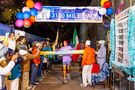
'3100: Run and Become' opens in theaters across the United States
By Nirbhasa Mageeauthor bio »
Sunday 19. ágúst 2018
About the author:
Nirbhasa is from Ireland. He is an enthusiastic multi-day runner, having completed four times the Sri Chinmoy Self-Transcendence 3100 Mile Race - the longest race in the world.
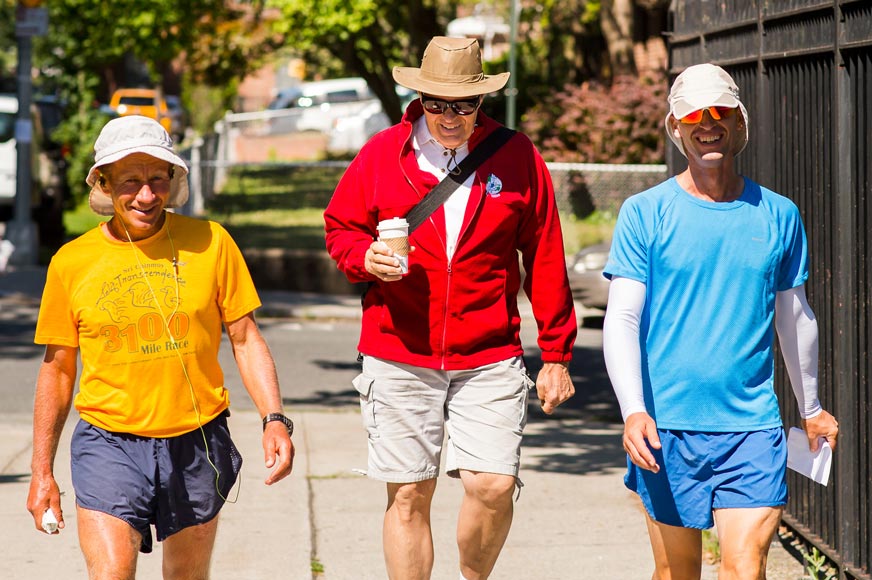
For almost three years, filmmaker Sanjay Rawal has been exploring the significance of running in different cultures across the world, spending time with the Gaolo-San bushmen in Botswana, the legendary Japanese gyoman-san running monks, and Navajo runners in the deserts of Arizona. A large part of his time was spent following the 52-day journey of the 3100 Mile Race, documenting two runners - our record holder and 14-time finisher Asprihanal Aalto from Finland and first-time entrant Shamita Achenbach-König from Austria - as they bravely embark on this modern day running oddyssey.
The result of all that hard work - the compelling 80-minute long documentary 3100: Run and Become - is now being released in theaters across the USA to an extremely enthusiastic reception.
"This film shows how great anyone can become when they transcend their limits." - Tegla Laroupe, women's marathon record holder
Reflections on the 2018 Sri Chinmoy Self-Transcendence 3100 Mile Race
By Tejvan Pettingerauthor bio »
Thursday 9. ágúst 2018
About the author:
Tejvan organises short-distance running and cycling races for the Sri Chinmoy Marathon Team in his home city of Oxford. He is also a very good cyclist, having won the National hill climb championships in 2013 and finished 3rd in the National 100 Mile Time Trials in 2014.
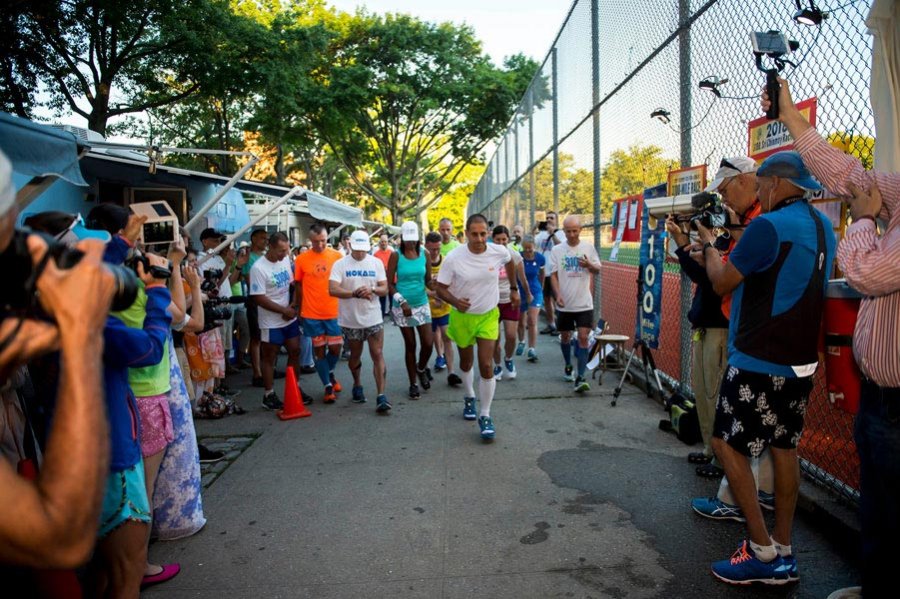
The start of the 2018 3100 Mile Race
The first laps of the 52 day race
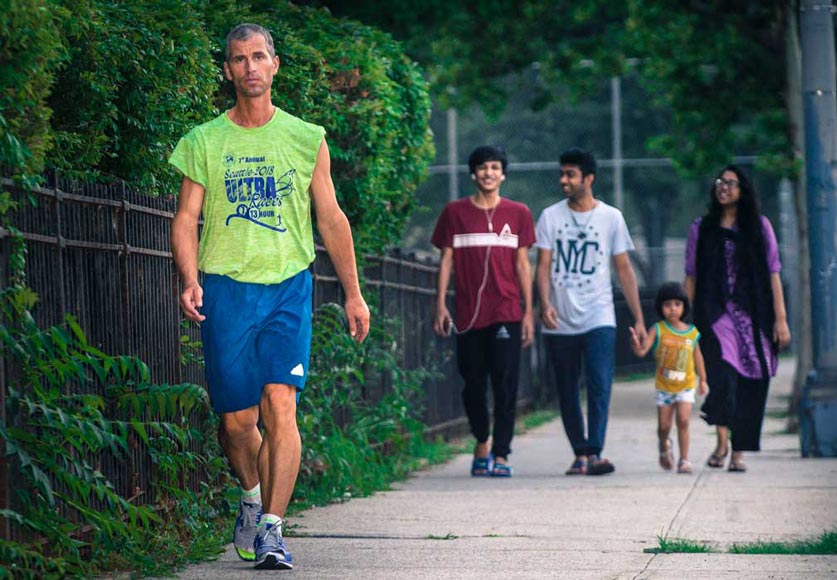
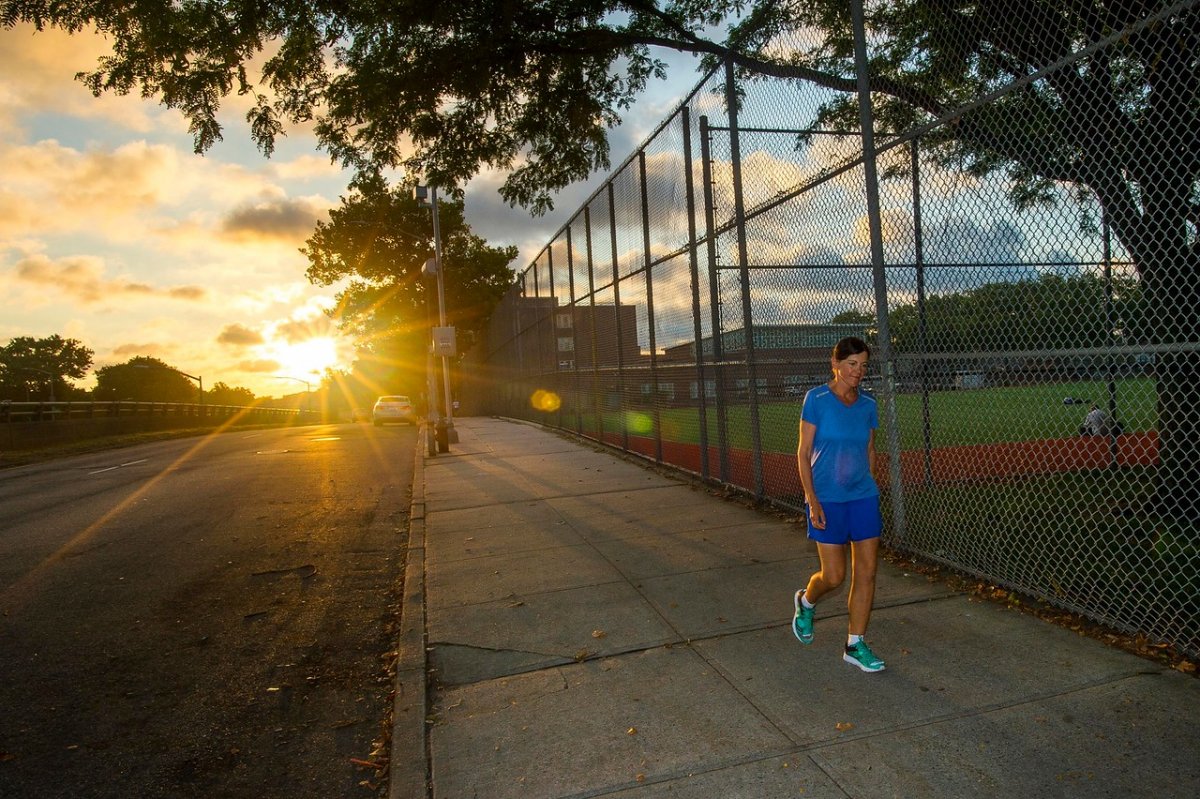
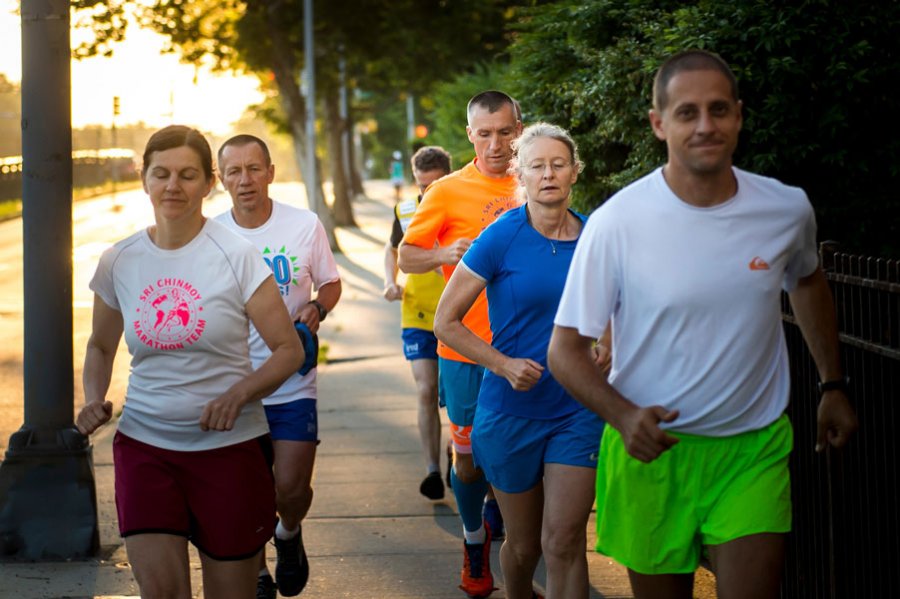
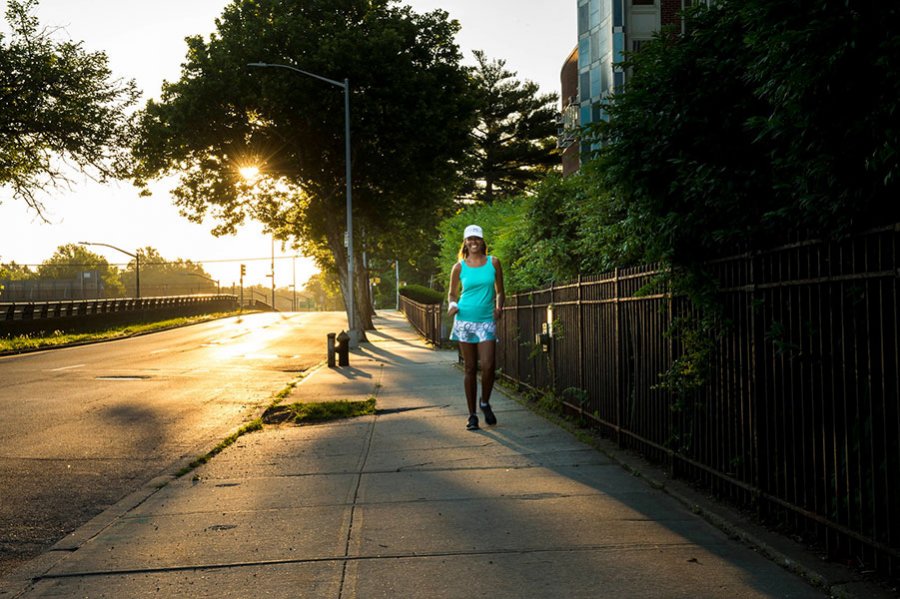
The race seamlessly mixes in with everyday life in the neighbourhood
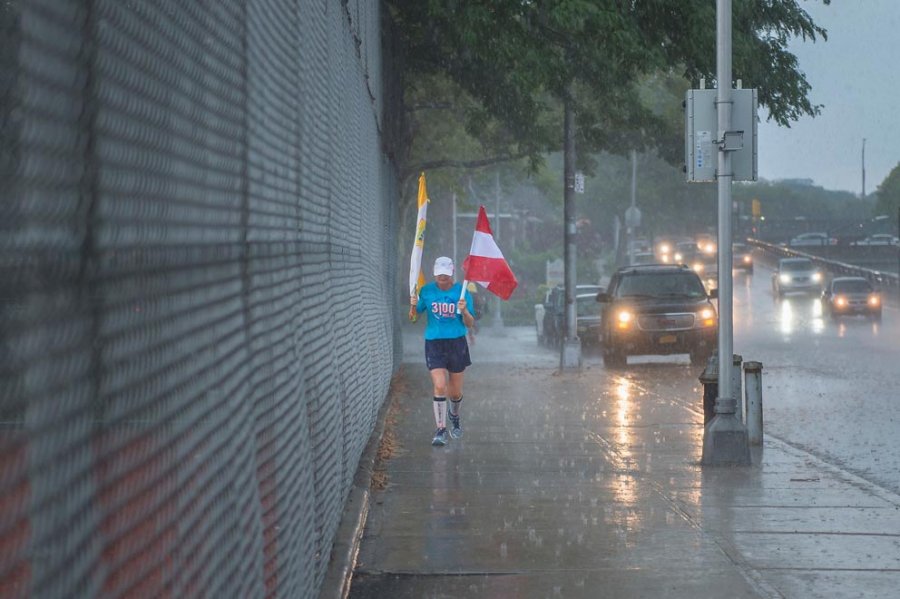
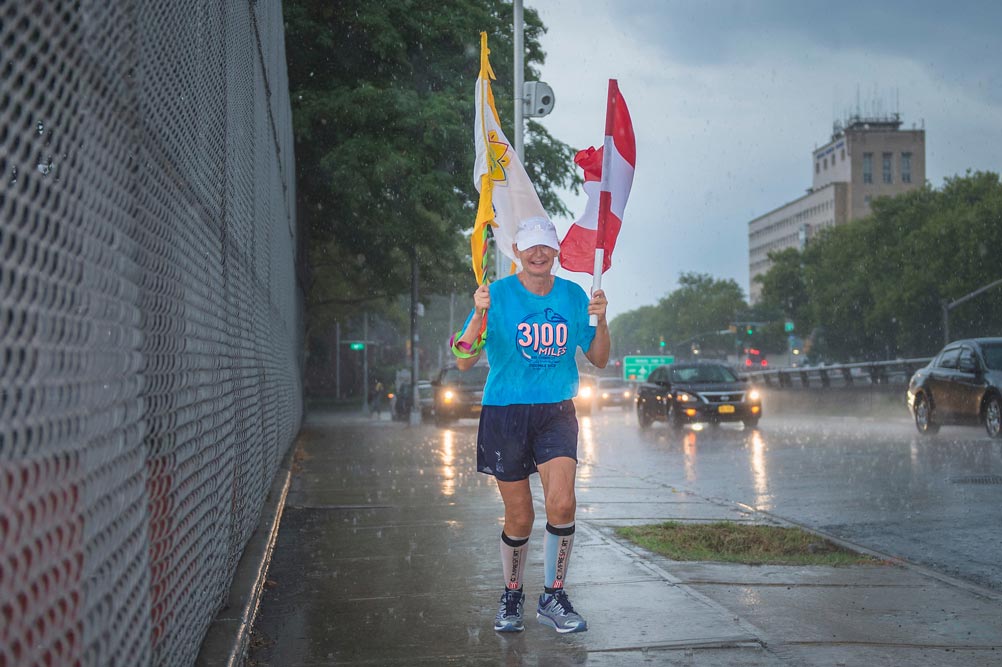
The race never stops for wind, rain or heat.
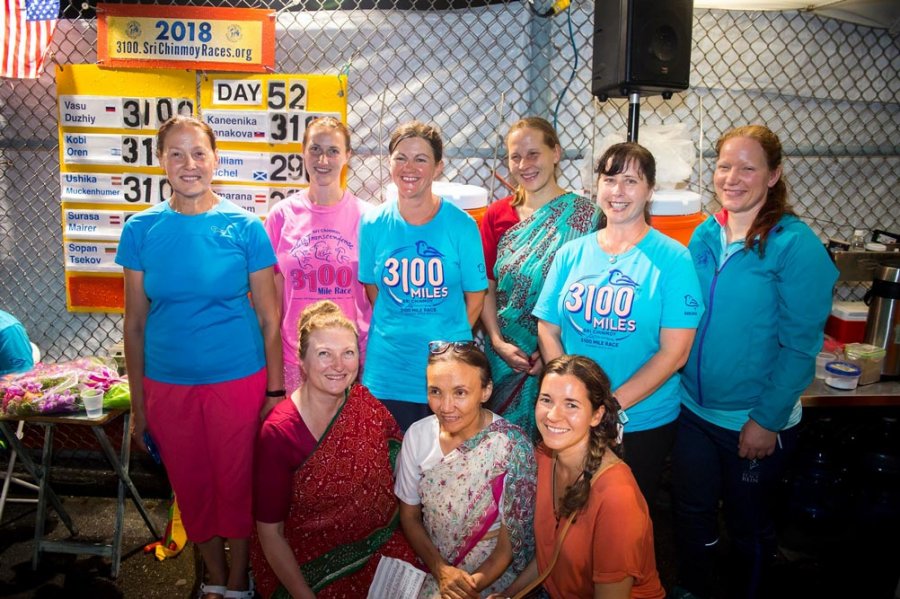
Behind every runner is a team of helpers
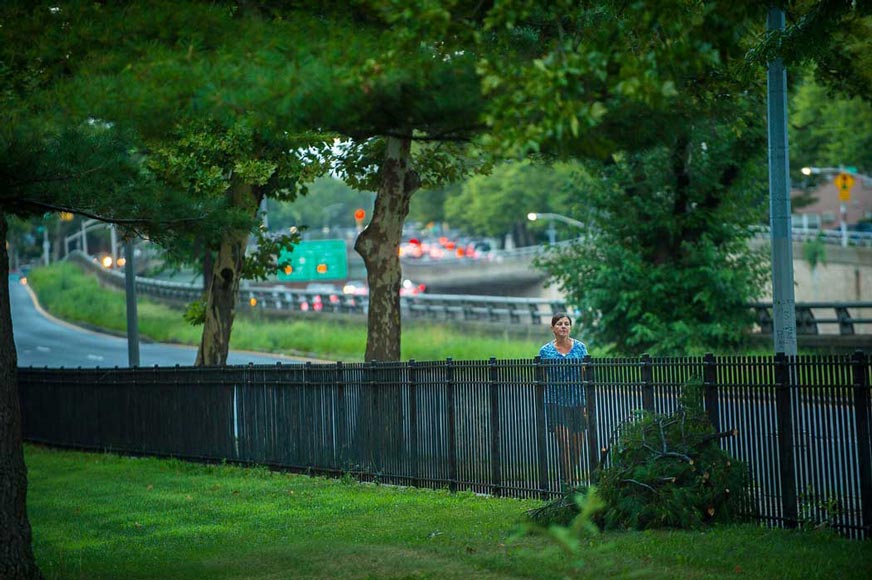
The unique sporting environment of the 3100 Mile Racecourse
Vasu, Sahishnu (a race director) and Smarana - all smiles
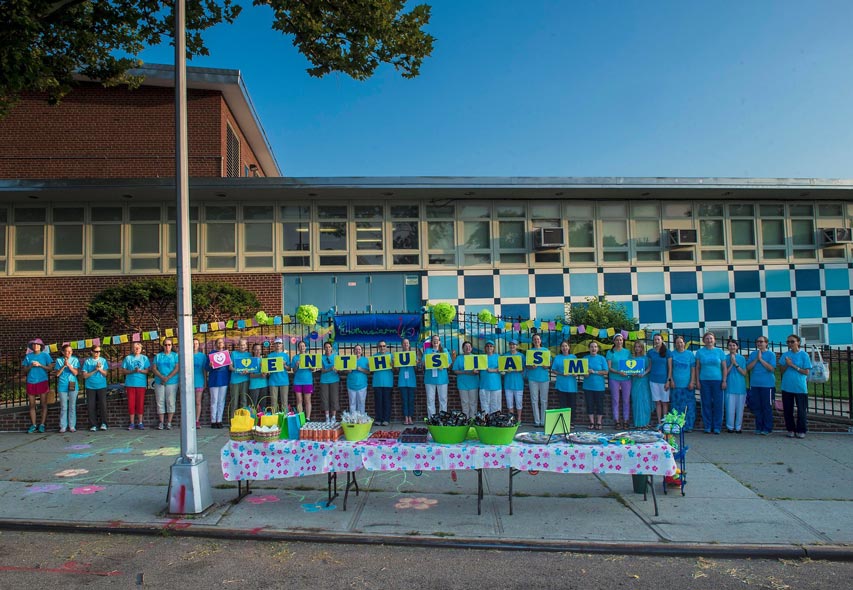
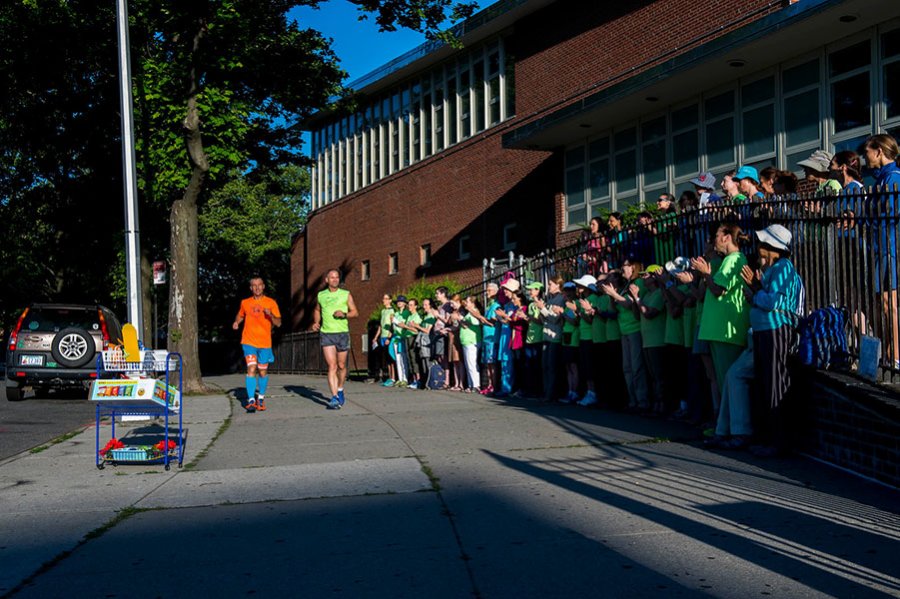
It is supported by a large team of volunteers, including cooks, counters, organisers, masseurs and those who come just to offer encouragement to the runners.
Kaneenika and Yolanda
Sopan and Ananda-Lahiri
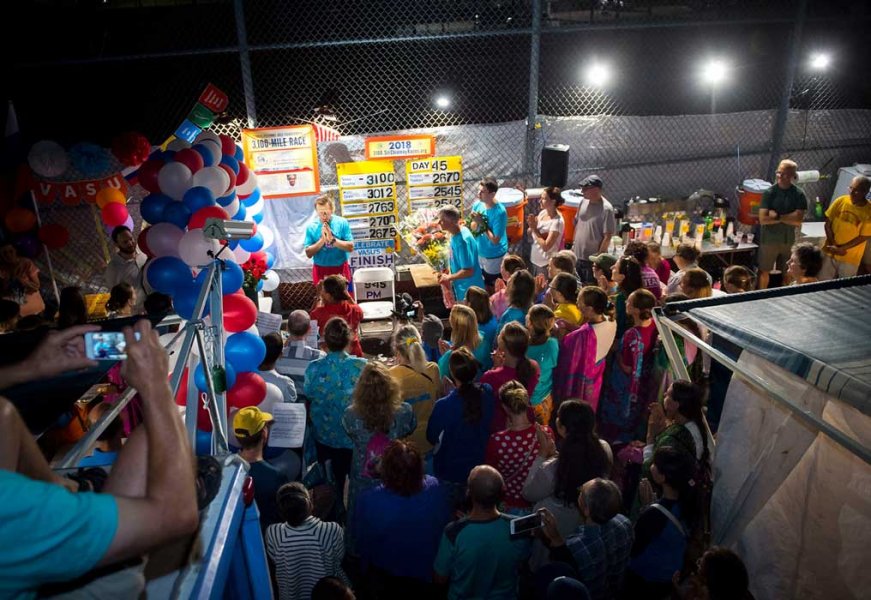
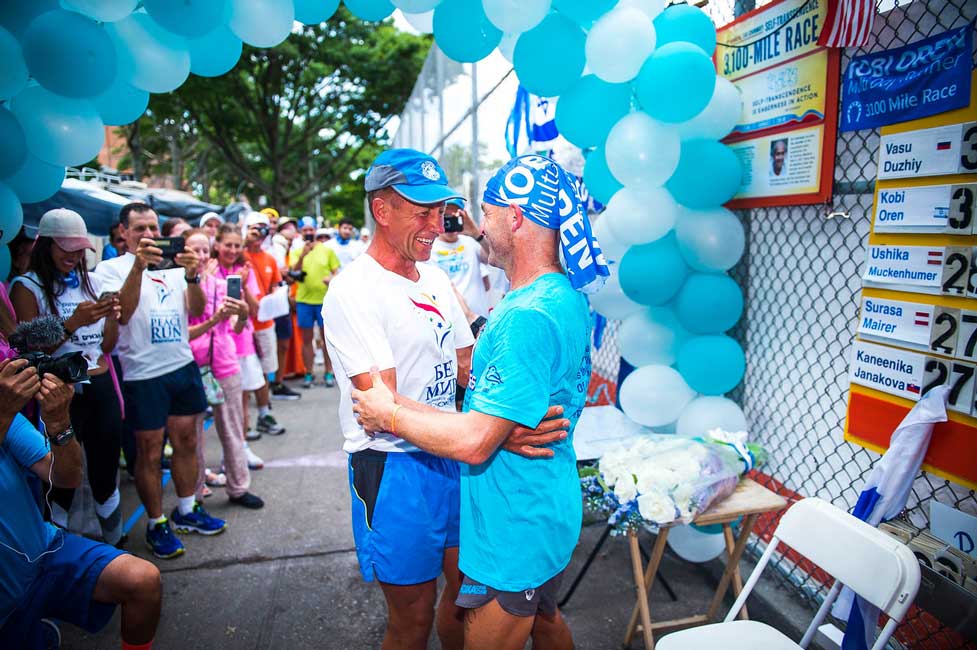
A small crowd to see Vasu's finish
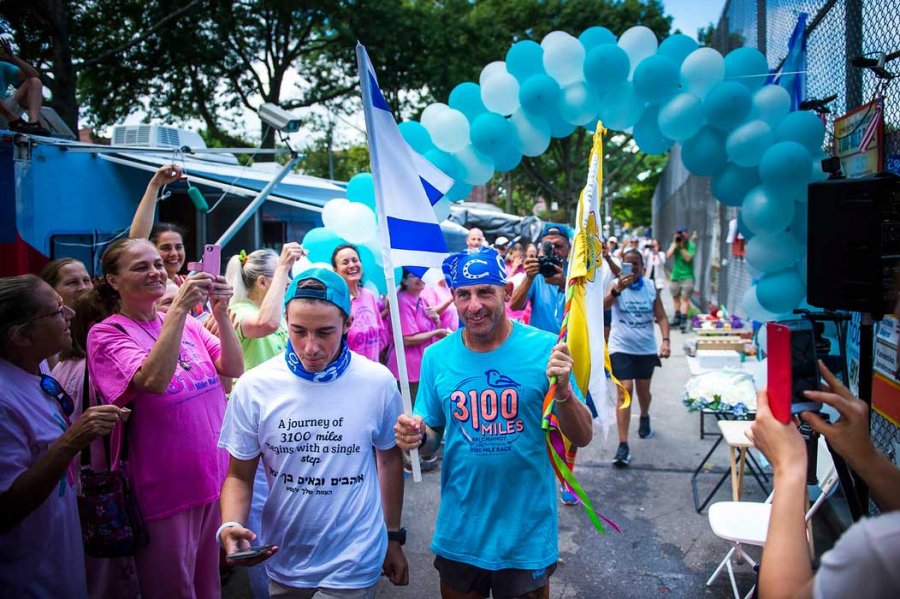
A journey of 3100 Miles
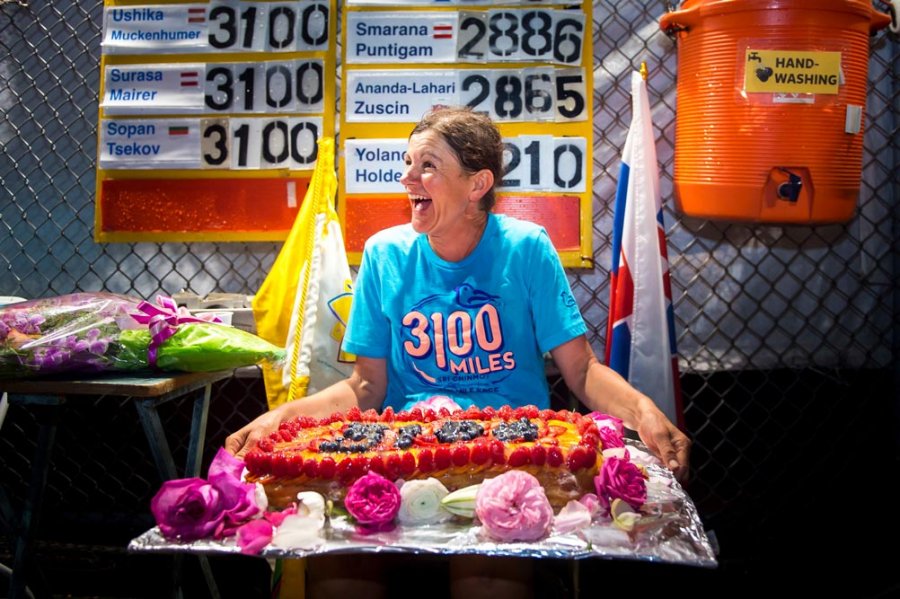
A well deserved cake!
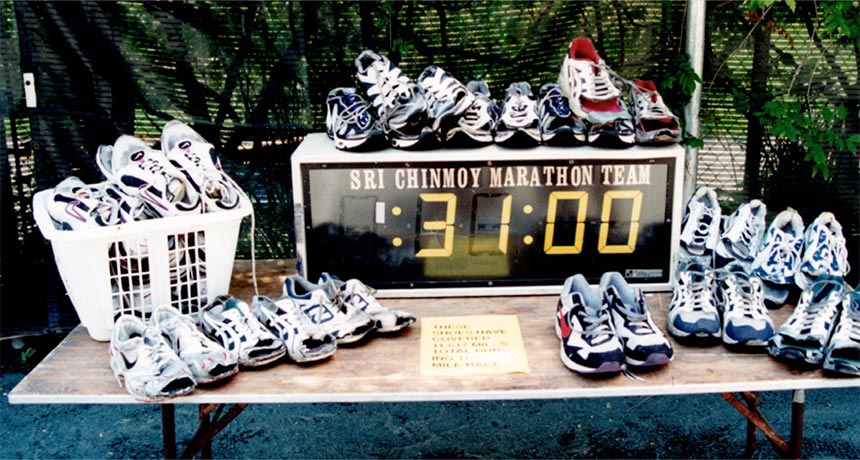
The Sri Chinmoy 3100 Mile Self-Transcendence Race is the world's longest certified footrace. In this - the 22nd edition of the race - ten runners completed a combined total of 28,475 miles around a modest block of concrete paving in Queens, New York, a journey akin to running the entire circumference of the earth, plus an extra 4,000 miles. Yet, behind these impressive statistics is an even more profound inner experience, as the runners seek to discover untapped reserves to overcome the physical and mental challenges of running this 'Everest of ultra-distance racing.'
Outwardly, there is little reward for sacrificing two months out of the year to come to this concrete block in New York, and yet there is an inner pull which attracts runners to keep coming back.
“This race was challenging because of the weather. In the end, I am so happy and only grateful that I have done it. You know at the end that it was worth the struggle. I am just happy that I took the challenge and I could do it. So at the end, there is always gratitude and gratitude.”
Surasa Mairer, women's winner
After suffering through multiple heatwaves, Surasa finished in a downpour - but the rain could not dampen her spirits.Sri Chinmoy at the 3100 Mile Race
The 3100 Mile Race was founded by Sri Chinmoy in 1997, evolving out of the Sri Chinmoy Marathon Team's pioneering promotion of multi-day distance events. Sri Chinmoy saw the innate human drive for self-transcendence as a process which could give a real sense of satisfaction.
“12 years ago when I completed my 2nd race here in 2006, he (Sri Chinmoy) was giving an interview to a journalist of a local TV station. It was four hours before my finish and, as I was running by, I heard Sri Chinmoy saying, 'we can be truly happy only when we constantly transcend ourselves, both inwardly and outwardly.'”
Sopan Tsekov, Bulgaria, fifth-place finisher
After finishing the race on his first two attempts, Sopan returned five more times to the race and was unable to reach the 3100 Mile goal. Yet, the pull of the race is so strong, Sopan returned this year and finally managed to finish with little more than an hour to spare before the 52-day cutoff.
Kobi Oren from Israel is an ultra-running legend with an impressive palmeres. A third of the way into the race, he held a narrow lead over eventual winner Vasu Duzihy, from Russia. Yet as Vasu gained the lead and moved further out of reach, Oren began to experience that this unique race was about more than just winning, and he felt the inner necessity to live this unique opportunity to the full. He ended up finishing second, but the outer disappointment was more than compensated by the inner fulfilment.
"If it is just to run 1,000 miles three times more then it is worth nothing. So I thought to myself, I want to do something else. So when I decided to change after I had completed my first 1,000 miles. Which I did in a record time of 13 days I decided I had to live differently. Then came the change.”
Kobi Oren
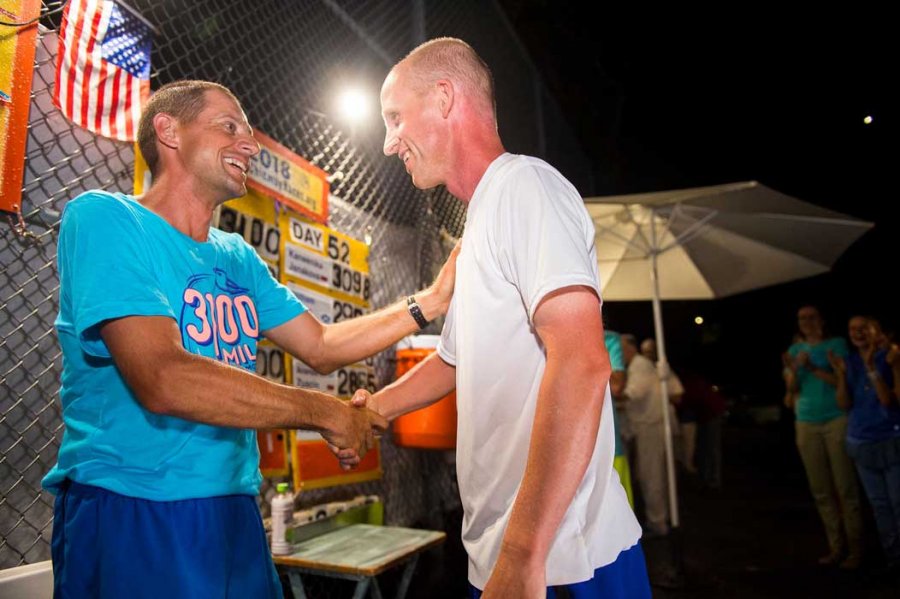
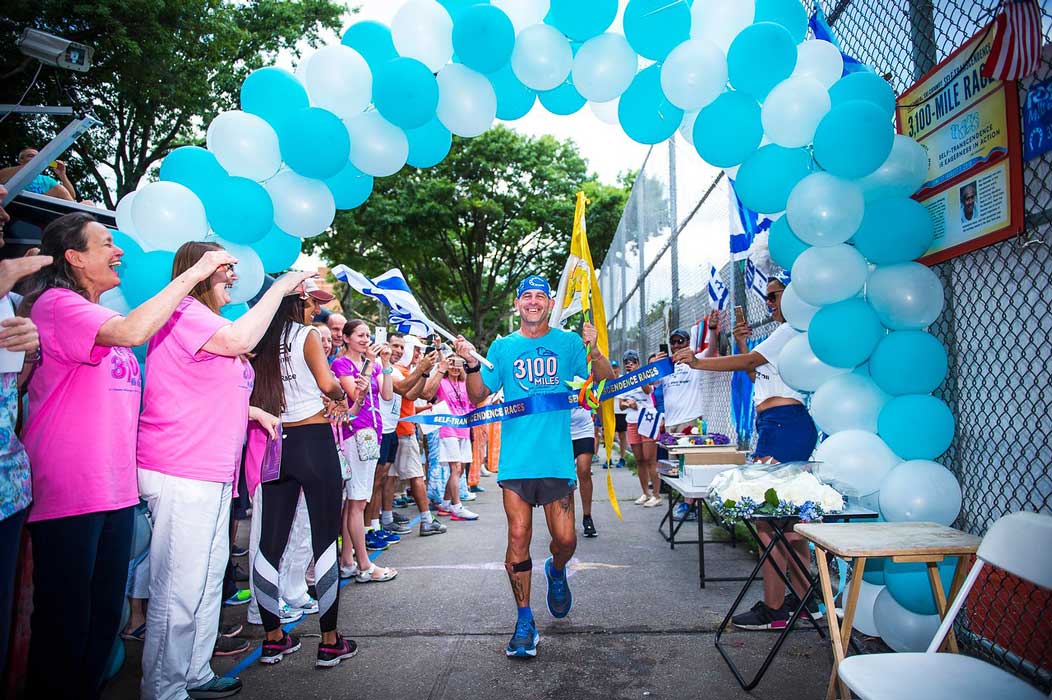
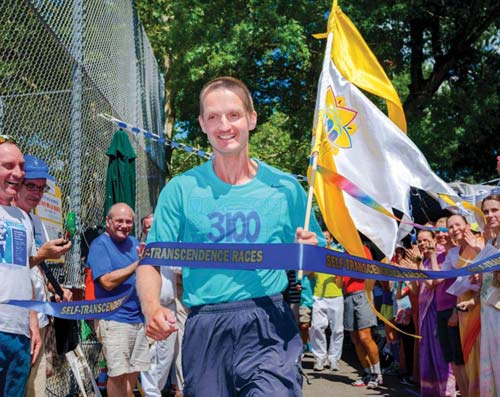
Vasu Duzihy, the quiet-spoken man from St Petersburg, retained his title from 2017, winning the overall race for the third time with his seventh consecutive finish. As he crossed the line, he spoke about the inner meaning of the race.
“Everybody who finishes the race is the winner. I think the race is a game of the Supreme, and we just play our roles. It makes no difference if you win or you are second or last. It is just a game that you need to play your own role...If by running here we are able to inspire others to go to to try new things and go to their limits. To do something in their own life. To be a better citizen of the world.”
Vasu Duzihy
The second women's finisher was Kaneenika Janakova from Slovakia. She is the women's course record holder, breaking the record in 2017 with a time of 48 days+14:24:10. However, in this year's race, physical difficulties mid-race meant that at one stage she was 40 miles behind the daily average needed to finish the race. For any runner to fall behind the daily minimum of 60 miles is challenging both physically and mentally as it means the runner needs to exceed their previous daily average, despite the increased fatigue as the race progresses. However, like the other runners, she approached this philosophically and saw it as a challenge to overcome.
“What I am observing is that my miles are not what they should be to finish the race. But just the same I feel that the more the race is happening, the more I want to continue.”
Kaneenika Janakova, after 3 days
Her reward was to finish on the last day of the race, with less than an hour to spare.
Ushika Muckenhumer
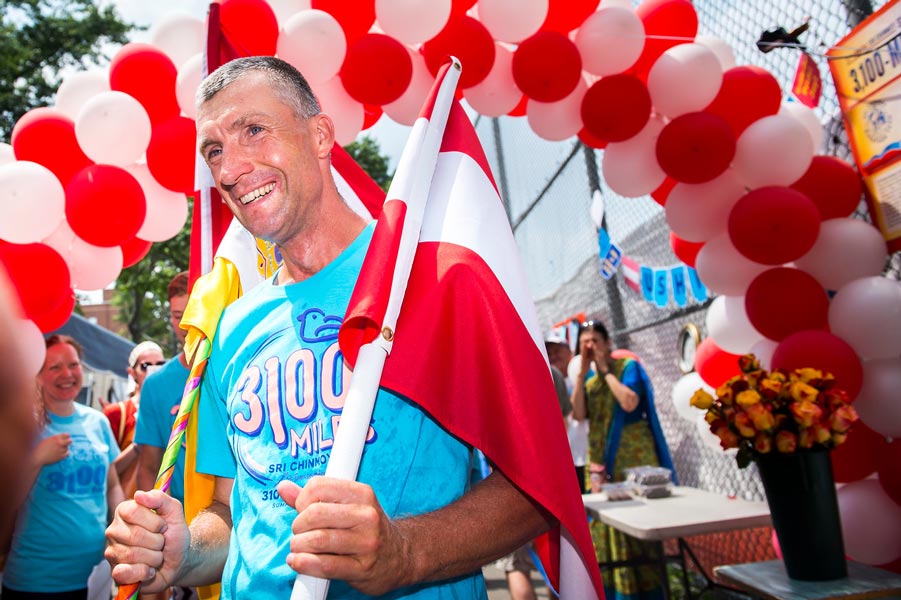
Like Oren, Ushika Muckenhumer from Salzburg, Austria also joined the illustrious list of finishers on his very first attempt. He finished in a time of 50 days+07:34:46 after a very consistent race.
To run a marathon is a considerable achievement, but to complete a race like the 3100 Mile Race in 52 days, is beyond anyone's comprehension. Even after 22 years of running the list of finishers is very exclusive - just over 40 names.
William Sichel hails from a tiny island in the Orkney Islands, Scotland with weather and conditions almost the complete opposite to a humid New York summer. In 2014, at 60 years of age, he became the oldest person to finish the race. This year, Sichel finished with a total of 2904 miles but still found time to appreciate the opportunity of this unique race - which brings the runner such a range of emotions and feelings, often all within the same day.
William Sichel running with fellow competitor Smarana Puntigam
“This is all such an unusual experience, in every possible sense. Both athletically, physically, and mentally. It is such an unusual thing to do. There are only a handful of people in the whole world that have ever done this. But those are the experiences that you take with you to the grave. But you have to do them to get the benefit that they will always give back to you.”
William Sichel
3100 Mile race 2018 - final results
Vasu Duzhiy, 52, St Petersburg Russia 44 days+16:03:53
Kobi Oren, 46, Kiryat Tivon Israel 46 days+03:24:48
Ushika Muckenhumer, 50, Salzburg Austria 50 days+07:34:46
Surasa Mairer, 59, Vienna Austria 51 days+12:47:37
Sopan Tsevtan Tsekov, 37, Sofia Bulgaria 51 days+16:46:38
Kaneenika Janakova, 48, Bratislava Slovakia 51 days+17:06:59
William Sichel, 64, Sanday, Orkney Isles. Scotland 2904.2496 miles
Smarana Puntigam, 47, Vienna Austria 2886.6880 miles
Ananda-Lahari Zuscin, 43, Kosice Slovakia 2874.0656 miles
Yolanda Holder, 60, Corona, CA USA 1210.6528 miles
At this race, there is no prize money or commercial presence. Occasionally, some outside media do visit the race, but mostly it involves long days of running around a modest and diverse borough of Queens.
Related
Perfection Journey - Interview with runners, blog by Utpal. All quotes above are taken from Utpal's blog
Tejvan recalls his journey to becoming a national cycling champion
By Nirbhasa Mageeauthor bio »
Sunday 5. ágúst 2018
About the author:
Nirbhasa is from Ireland. He is an enthusiastic multi-day runner, having completed four times the Sri Chinmoy Self-Transcendence 3100 Mile Race - the longest race in the world.
In 2013, after many years of trying and some very near podium misses, Tejvan Pettinger from the Sri Chinmoy Cycling Team won the national cycling hill-climb title, one of the top races on the UK national cycling calendar. Tejvan began cycling in earnest in 2005, but despite being a promising rider the prospect of a national title seemed very much like a faraway dream.
In the year before his passing in 2007, Tejvan's Guru (or spiritual teacher), Sri Chinmoy, made quite a few references to Tejvan being 'our cycling champion'. Sri Chinmoy preferred to teach his students through silent meditation, and was not one for frivolous comment; often these seemingly offhand remarks had a way of awakening his students to new possibilities. (For example, also in 2006-7, Sri Chinmoy repeatedly and seemingly offhandely asked another student, Grahak Cunningham, whether he had done our longest race, meaning the 3100 Mile race. Even though up until then he had very little ultrarunning experience, Grahak was inspired to start that race and see what happens - he went on to finish the race on his first attempt, and later won the race in 2012).
As the years went past, Tejvan realised that the goal of a national title was indeed possible and put more and more focus on it, both physically in terms of being in the best shape and having the right equipment and approach, but also inwardly in terms of being receptive to divine Grace - a journey which culminated in everything coming together in 2013 for the ultimate prize.
The fastest first-time finishes of the world's longest race
By Nirbhasa Mageeauthor bio »
Saturday 4. ágúst 2018
About the author:
Nirbhasa is from Ireland. He is an enthusiastic multi-day runner, having completed four times the Sri Chinmoy Self-Transcendence 3100 Mile Race - the longest race in the world.
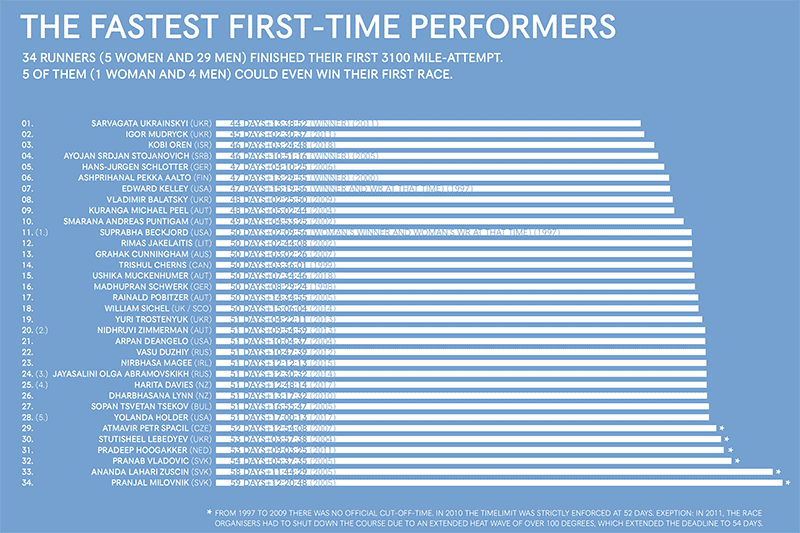
Even for elite runners, it is by no means guaranteed to finish the 3100 mile race within the 52 day cuttoff on your first attempt. This year aw two runners do just that - Kobi Oren from Israel crossed the line in 46+ days, becoming the third fastest first-time finisher, and Ushika Muckenhummer from Salzburg, Vienna followed suit on day 51.
Matthias van Baaren has been sending us all kinds of interesting race graphs and statistics for many years now; this year he has compiled a list of first time finishes over the years. As you can see, in the early years the race often went past the official 51-day limit at Sri Chinmoy's discretion, but then in 2010 the limit was strictly enforced at 52 days. In 2011, the race organisers had to shut down the course due to an extended heat wave of over 100 degrees, which extended the deadline to 54 days.
Uniting Sports and Spirituality: a feature article in Hinduism Today
By Rupantar LaRussoauthor bio »
Friday 22. June 2018
About the author:
Rupantar has been the race director of the Sri Chinmoy Marathon Team since 1985, having been asked by Sri Chinmoy to serve in that capacity. As well as working on the big races the US Marathon Team organise each year - the 3100 Mile Race and the Six and 10 Day Race - he also spends a considerable amount of time archiving the Marathon Team's 40 year history on this website.
Asprihanal Aalto sets the 3100 Mile Race world record in 2015
The April/May/June issue of Hinduism Today contained an extremely in-depth article written by Dr. Kusumita Pedersen, Professor Emerita of Religious Studies at St. Francis College. Kusumita has been studying meditation with Sri Chinmoy since 1971 - long before the founding of the Marathon Team - and this article explores the many different ways in which sport can contribute to personal growth and development, and a happier world.
Quite unusually for Indian spiritual teachers, Sri Chinmoy was an avid sportsman who brought the philosophy of self-transcendence to all of his activities. The article talks at length about Sri Chinmoy's youth spent in an ashram in south India which included sports as an integral part of the discipline, the running and weightlifting endeavours he pursued throughout his life, and the different initiatives he founded - the Impossibility-Challenger festival which has featured numerous Guinness World record attempts, the Sri Chinmoy Oneness-Home Peace Run which has carried a burning peace torch to over 140 countries, and of course the Sri Chinmoy Marathon Team. In particular, the article shares the inner experiences of some of the runners of the Sri Chinmoy Self-Transcendence 3100 Mile Race, which the Marathon Team puts on every year and which is the longest certified road race in the world. The 2018 edition of the run started on June 17, and will continue until August 7.
“I hit the wall many times—and went on. I was convinced I had taken my body to the limits of its endurance, but then I went deeper, into the core of my being where strength, power, poise and silence all exist. If we can tap into this inner source, nothing can stop us moving forward.” - Grahak Cunningham, 4-time finisher and 2012 winner.
Start of 2018 Sri Chinmoy Self-Transcendence 3100 Mile Race
By Tejvan Pettingerauthor bio »
Monday 18. June 2018
About the author:
Tejvan organises short-distance running and cycling races for the Sri Chinmoy Marathon Team in his home city of Oxford. He is also a very good cyclist, having won the National hill climb championships in 2013 and finished 3rd in the National 100 Mile Time Trials in 2014.
The start
The race starts
The Runners on the first lap
Afternoon sun
Encouragement
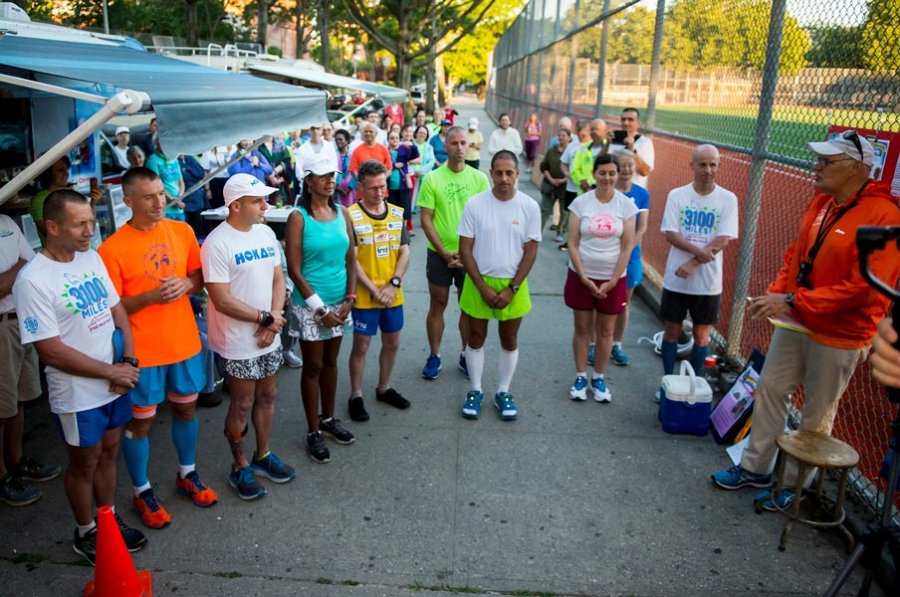
On 17 June 2018, ten intrepid runners took to the start line of the world's longest certified road race - the 22nd edition of the Sri Chinmoy Self-Transcendence 3100 Mile Race. Over the next seven weeks, the runners will aim to complete a daily average of 60 miles or more in order to finish the race within the official time limit of 52 days. The runners have to contend with the hot New York summer, a hard concrete course and the many physical and mental challenges of competing in this epic of self-transcendence.
The race was founded by spiritual teacher and ultra-runner pioneer Sri Chinmoy, who saw distance running as a vehicle to enable runners to bring to the fore their physical, mental and spiritual capacities to complete this unique challenge.
“We have to believe in a higher Power.
Only by believing in a higher Power
Can we go beyond and beyond
Our limited, human capacity.”
In this year's race, we have the 2017 winner, Vasu Duzhiy from Russia. Also returning to the race is Kaneenika Janakova, from Slovakia who last year broke the women's world record, setting a time of 48 days+14:24:10. Proving that age is no barrier to ultra distance, the race also welcomes William Sichel (64) from Orkney, Scotland, UK. Sichel holds a host of Scottish and UK distance records and completed the race in 2014. Yolanda Holder, 60 years old and the only person to have racewalked the distance, also returns to the race after completing last year at her first attempt in a time of 51days+17:00:13. Surasa Mairer, former 3100 Mile women's record holder and current female world record holder for 1000 km, 700 miles, and 1300 miles is also starting.
This unique race has developed a following from all around the world. You can follow the race by viewing two race cams, daily results, daily blogs and photos.
Six-day race champion Petra Kasperova featured in new book
By Tejvan Pettingerauthor bio »
Saturday 16. June 2018
About the author:
Tejvan organises short-distance running and cycling races for the Sri Chinmoy Marathon Team in his home city of Oxford. He is also a very good cyclist, having won the National hill climb championships in 2013 and finished 3rd in the National 100 Mile Time Trials in 2014.
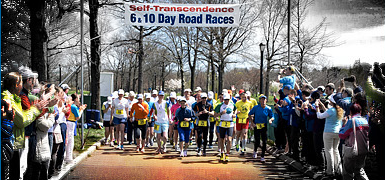
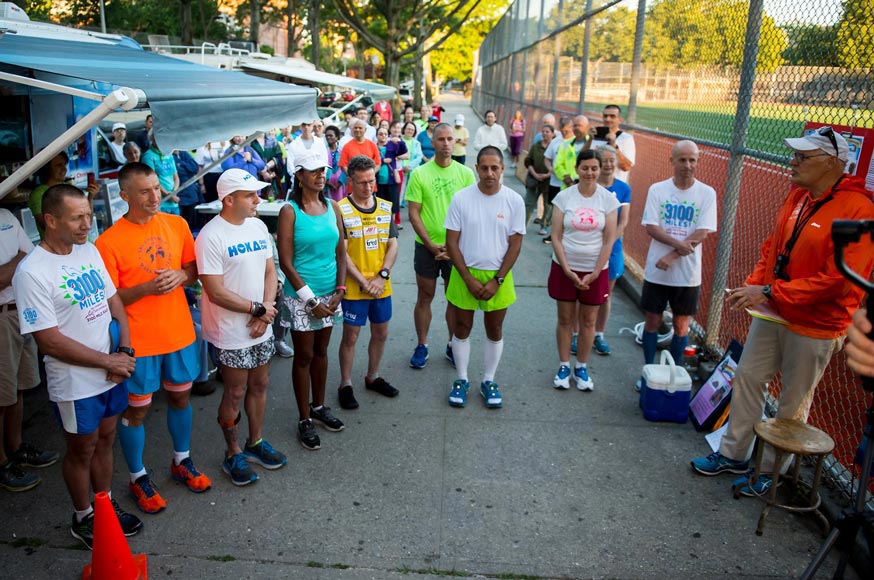
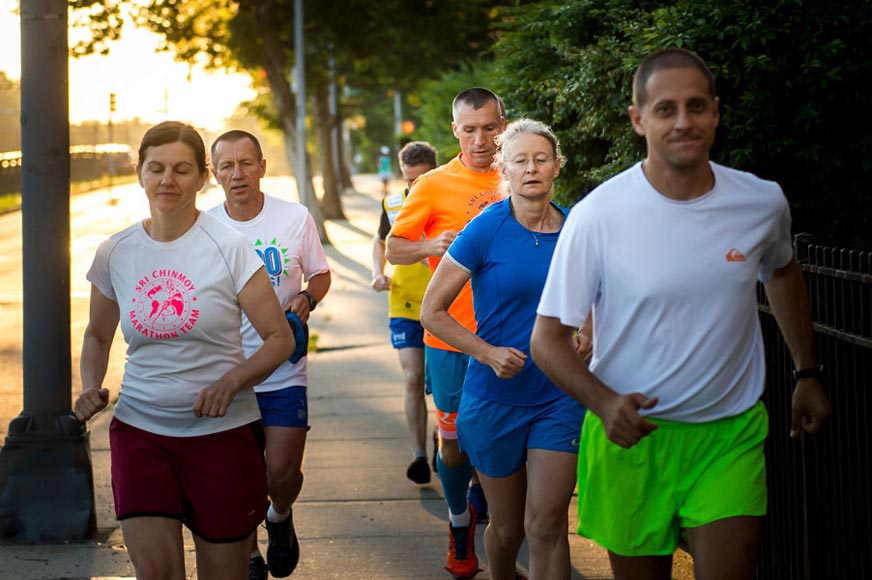
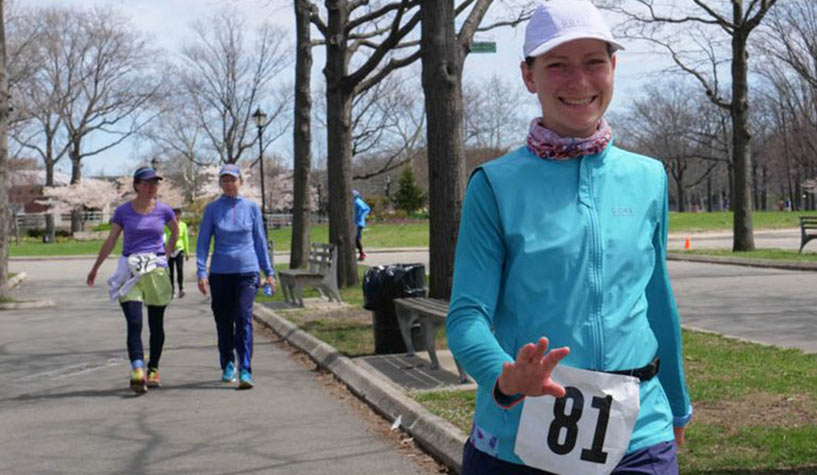
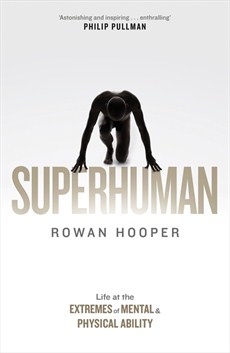
Petra Kasperova from the Czech Republic, the winner of our Sri Chinmoy Six Day Race which took place this year in Flushing Meadows Corona Park in New York, was recently featured in a new inspirational book called Superhuman, by Rowan Hooper. The book looks at people who have achieved notable features of self-transcendence, and tries to answer what motivates them to reach for these goals. Petra finished this year's race with a total of 370 miles, at only her second attempt at running a multi-day event.
During the 6 day race, the runners can be out on the course for many hours at a time, and have to deal with numerous physical issues. Petra credits meditation with giving her the inner strength to overcome these obstacles.
I am certain I would never do so well in running if it wasn't for meditation and spiritual techniques that I have learned and applied during training and racing. The techniques can change from race to race and even during a race. I like to repeat mantras, qualities and prayers - that seems to help keeping my mind calm and focused. I try not to think at all, just to be focused. Repeating qualities like gratitude seem to keep my mind clear and make me more aware of what is going on inside of me and also outside of me.
Running is an integral part of Petra's life - she works in the specialist running shop Run and Become in London, where she advises runners on all manner of running issues. She often trains by running to work and back.
"I find that running has made me stronger, not just physically but on many different levels. It is always when we go outside our comfort zones, outside what we think is possible, when we transcend ourselves in any field of life (not just running), that's the time where we need to dig deep, and when we do, we get glimpses of who we truly are and who we really want to be – for a happy self and a happy world."
The winners of the 2018 Sri Chinmoy 6 and 10 Day Races: (l-r) Asprihanal Aalto, John Geesler, Ilvaka Nemcova and Petra
Sri Chinmoy on the best attitude to take towards competition
By Nirbhasa Mageeauthor bio »
Monday 11. June 2018
About the author:
Nirbhasa is from Ireland. He is an enthusiastic multi-day runner, having completed four times the Sri Chinmoy Self-Transcendence 3100 Mile Race - the longest race in the world.
The philosophy behind Sri Chinmoy’s races is one of self-transcendence - getting joy by transcending one’s own capacities. However, he felt that competitive races did have their own value, provided it was done in the proper spirit. Here are some of his writings on the best frame of mind to approach competition:
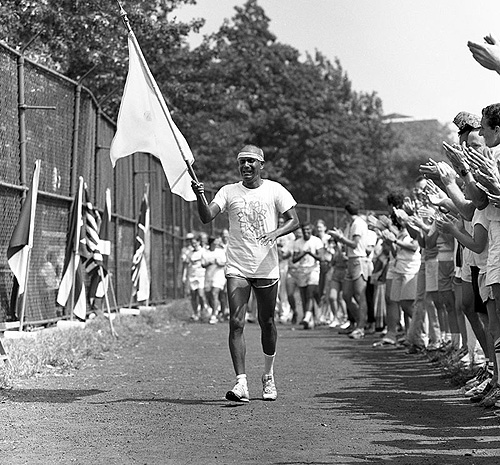
Sri Chinmoy finishes a 47-mile race in 1979, at the age of 48
In competitive sports, our primary aim should be not to surpass others but constantly to surpass ourselves. In the outer life, when we run with our friends, we are seeing who is actually the best. And we cannot properly evaluate our own capacity unless we have some standard of comparison. But we compete not for the sake of defeating others, but in order to bring forward our own capacity. Our best capacity comes forward only when there are other people around us. They inspire us to bring forward our utmost capacity, and we inspire them to bring forward their utmost capacity. This is why we have competitive sports.
The value of competition is that you will try to transcend your capacity. If you lose to somebody after trying your best, it is absolutely immaterial. But if you don’t make progress even here on the physical plane, then you won’t try to make progress on the spiritual plane. At that time you will say, “I get up at 7:00 or 8:00 and then once in a blue moon I meditate. Who is going to see?” If you are sincere about making progress on the spiritual plane, then you can start your sincerity with the physical plane. Then the progress you make will spread to the mind and to the heart. I wish to say that there is nothing wrong with a competitive spirit, provided it is competitive in a good sense. You are competing with yourself.
While competing with others,
We see that our competition
Is actually with ourselves.
I always say that the goal is not static; the goal is an ever-transcending reality. Satisfaction is our goal, but we see that the goal itself is climbing high, higher, highest and running far, farther, farthest and diving deep, deeper, deepest.
A child's goal is to learn the alphabet. Then his goal becomes kindergarten, primary school, high school and college. And when he completes his university course, if he is sincere, he comes to realise that there is much more, infinitely more, for him to learn. Once a university student was boasting of his achievements. He said to Mother Earth, "I have completed my course. So look at me, look at what I have achieved." But Mother Earth said, "My son, you have just learnt the first letter of the alphabet. Now sit down and learn the rest."
The goal is constantly going high, higher, highest. Whatever we achieve can be today's goal, but it can never be tomorrow's goal. Tomorrow's goal is something infinitely higher, infinitely more illumining and infinitely more fulfilling. Perfection, which is satisfaction, is nothing short of constant self-transcendence. So here I wish to say that we do compete, but we compete with ourselves, with our own achievements, not with others.
References
The above writings were taken from Sri Chinmoy’s books The inner meaning of sport, A Twentieth Century Seeker, The body: humanity's fortress and Seventy-Seven Thousand Service-Trees
Tejvan organises short-distance running and cycling races for the Sri Chinmoy Marathon Team in his home city of Oxford. He is also a very good cyclist, having won the National hill climb championships in 2013 and finished 3rd in the National 100 Mile Time Trials in 2014.
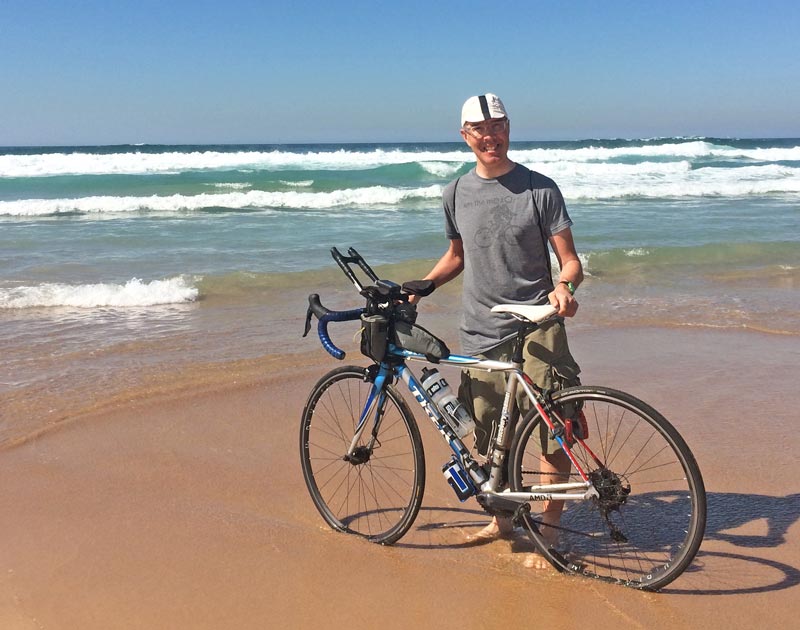
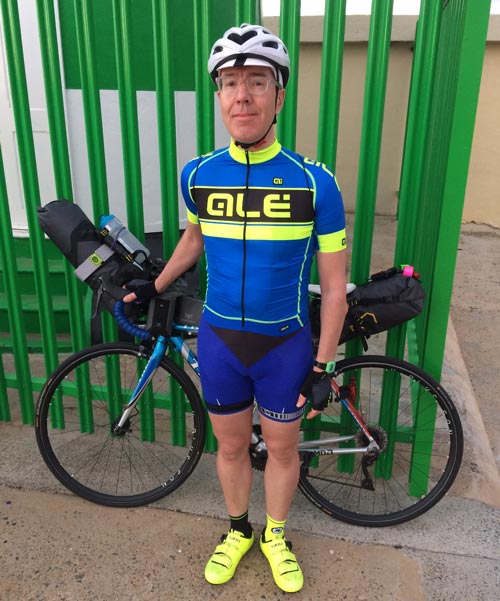
Vilas Silverton of the Sri Chinmoy Cycling Team recently completed a 5,474km cycle ride across Australia - as part of the Indian Pacific Wheel Race.
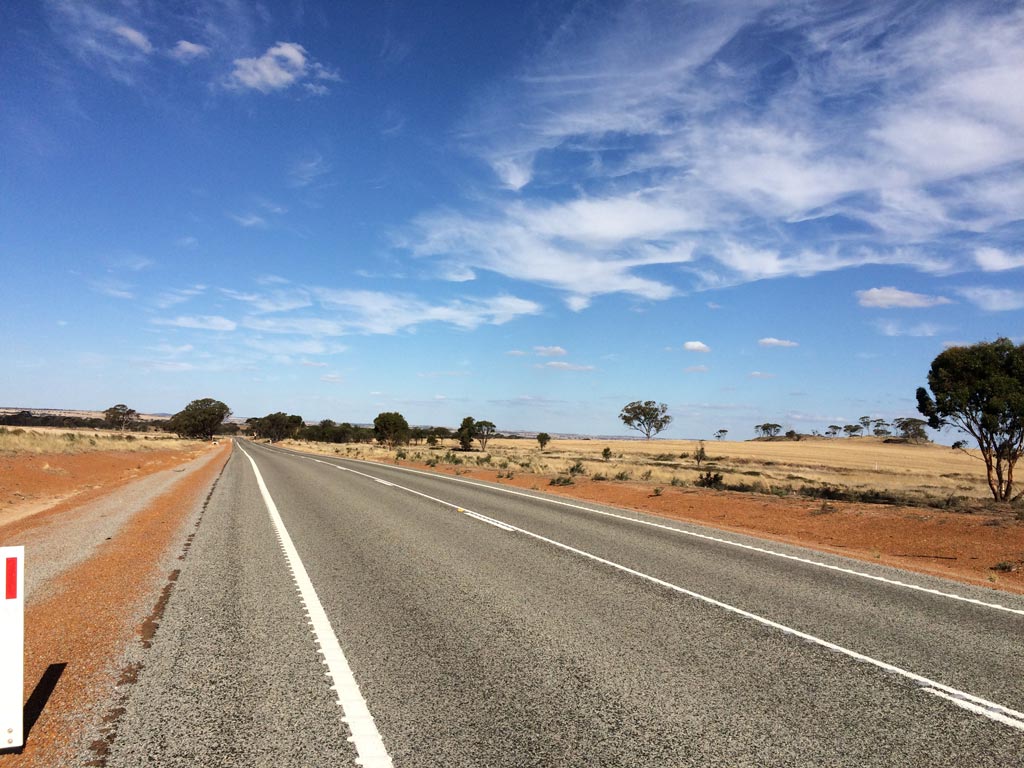
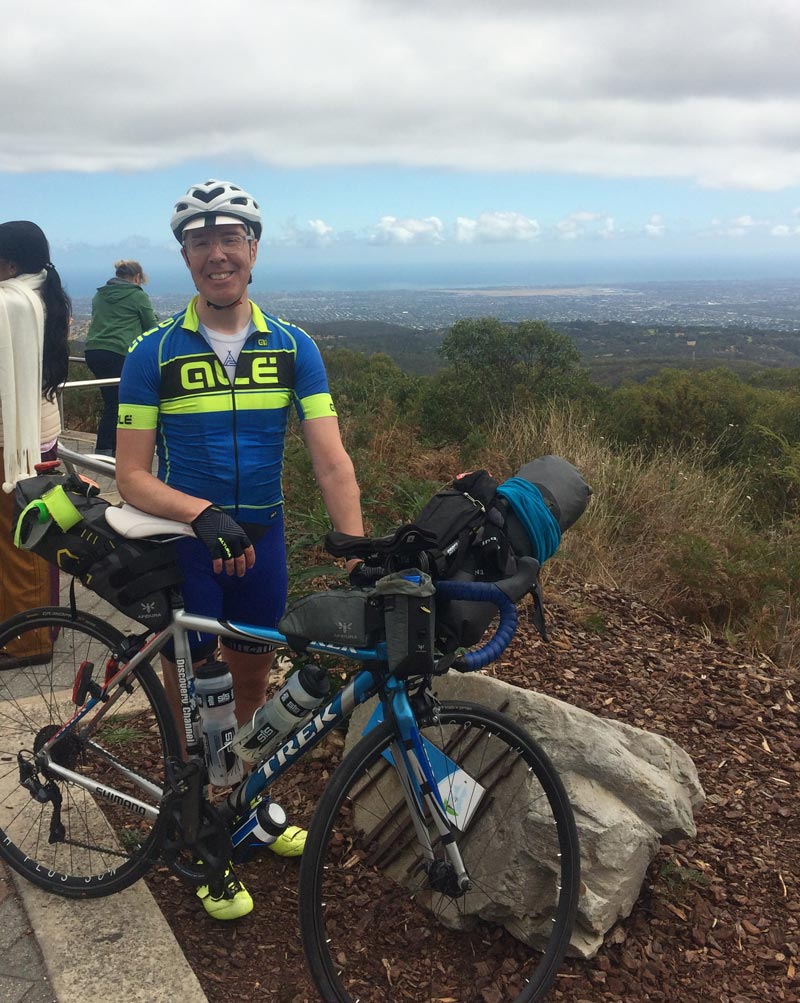
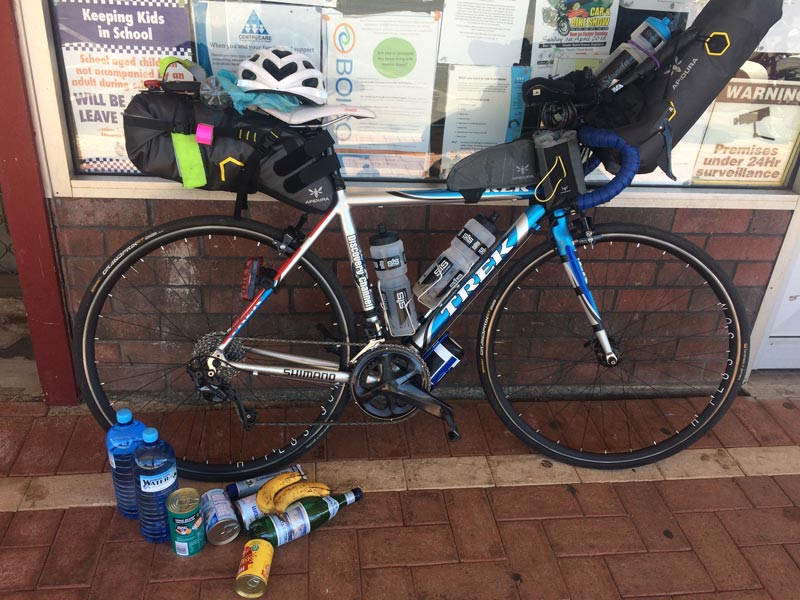
Vilas from Bristol, England started in Perth on 17 March and finished in Sydney nearly four weeks later. The route crossed the wide uninhabited plains of Western Australia before passing through the cities of Adelaide, Melbourne, Canberra and Sydney. During the race, Vilas rode mostly unsupported, often sleeping in make-shift shelters and buying his food on the way. For over 3,000 miles Vilas had to contend with heat, traffic, fatigue, long straight sections of headwind, the weight of his equipment, and the occasional temperamental kangaroo.
Vilas got inspired to do the ride after following the race in previous years and seeking a new personal target for self-transcendence in cycling.
In preparing for the race, Vilas attempted a few long audax rides through Great Britain, including a ride from Bristol to Glasgow and back. Over the cold English winter, Vilas completed several weeks of high mileage. However, his preparation was hampered by a knee injury from January to March, which meant little training in the final months. But, after an eventful few weeks, Vilas was able to complete the full distance finishing in Sydney.
Interview with Tejvan Pettinger
Q. What inspired you to do the race?
I followed the race closely last year, and I felt great joy in the heart at the prospect of entering the race.
Q. How did you prepare?
I rode the bike a lot! I built up over the year and completed some periods of high mileage. Though in Jan I injured my knee - so from Jan to Feb - I didn't ride much. And I needed to calm fears about not being able to train and even whether I would even be able to enter. But, after the good training in Dec, I felt I would be OK.
Q. How did you find ride itself?
Riding on the narrow roads was quite challenging. With cars passing close by, I found I was frequently inspired to pray for protection while cycling!
There were many challenges which made the ride more testing. On the first day, I was sick and this continued for much of the first week; as a result, I had to recalibrate my timescale. I just tried to ride as much or little as I could without worrying about time. The main objective was to finish. The fact I was sick meant I didn't physically push too much - it was an effort just to complete what seemed like the minimum.
During the ride, I learnt to be more tolerant and understanding of myself and other people. The various tests highlighted the importance of patience and resilience.
During the ride, I tried to be grateful for the moment and enjoy. When cycling I turned my phone off to avoid being distracted and gain an excuse to stop and break my rhythm.
Q. What did you enjoy about the event?
Meeting people by the side of the road who were following the ride on GPS tracking. For example, when I reached Adelaide, I found people were there to support and offer encouragement - I was grateful to meet people who were handing out food, and on some occasions putting me up for the night. Special thanks to friends in the Sri Chinmoy Centres in Perth, Adelaide and Melbourne.
Q. How did you feel about finishing?
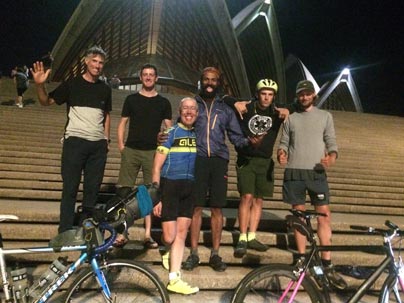
I felt relieved, somewhat elated while also being quite tired. When I finished, I discovered a group of riders who had finished earlier were waiting at the steps of the Sydney Opera House. Very unexpected and beautiful. I was also happy not to be riding anymore!
Q. How do feel a week after the race has finished?
It's a really long way! But it is nice to hear people were inspired by the event.
Nirbhasa is from Ireland. He is an enthusiastic multi-day runner, having completed four times the Sri Chinmoy Self-Transcendence 3100 Mile Race - the longest race in the world.
Vasu Dhuzhiy, from St Petersburg in Russia, is a two-time winner of the 3100 Mile Race, including a victory in last year's race despite having to spend many months during the previous year recovering from a serious back injury.
Recently he was invited on a tour of the Ural region, visiting 4 cities - Prem, Omsk, Ekatirinburg and Chelyabinsk and giving many talks to marathoners and running enthusiasts. The tour started auspiciously right from Vasu’s arrival at Prem airport - a new airport terminal was being dedicated that day, and the Governor of Prem was there handing out free suitcases to the first 5 passengers who were arriving that day. When Vasu came out from the luggage area, he was very surprised to find the Governor waiting for him to shake his hand and present him with his free suitcase!
The talks usually began with a slideshow presentation, and then Vasu started talking about his experiences at the race; the inner aspect of the race, about meditation, concentration, positive thinking and so on. Vasu is well known in the Marathon Team for his gracious and humble manner, and this aspect of his talk, along with his frequent humorous anecdotes, was very endearing to the audience. The talk was followed by question and answer sessions which often lasted from hours. During one talk in Omsk, Evgeniy Nepsha, the winner of 24 hour race in the Russian championship, attended and later stayed behind to share many useful things from his experience - he even helped to organise another informal talk in a yurt-shaped Mongolian tea room.
The talks also attracted quite a lot of TV and newspaper coverage in the different cities.
Sri Chinmoy Multisport Classic in Jindabyne [video]
By Tejvan Pettingerauthor bio »
Wednesday 14. March 2018
About the author:
Tejvan organises short-distance running and cycling races for the Sri Chinmoy Marathon Team in his home city of Oxford. He is also a very good cyclist, having won the National hill climb championships in 2013 and finished 3rd in the National 100 Mile Time Trials in 2014.
The Sri Chinmoy Multisport Classic, held in Jindabyne, is a unique multi-sport event held in the beautiful surroundings of Australia's Snowy Mountains. The annual event has been held for several years and combines water and land-based sports over 12 different legs.
The event attracts a diverse range of athletes who can compete either individually or part of a relay. This video, produced by Sarankhuu Jargal, shows highlights from the different sections including running, swimming, mountain biking and paddling. Steve Hanley a former winner also gives his brief thoughts on why he enjoys the race.
The course is varied, with 3 mountain bike legs ranging from easy to highly technical; 3 running courses from flat to very not-flat; 3 swims of between 1.2 and 2.5 kms; and 3 paddles of 5.5 to 9.5 kms. The swims and paddles criss-cross most of Lake Jindabyne, while the mountain bikers and runners thoroughly explore the rugged Eastern Escarpment, rolling farmland of the Western Shore, and bushland of the adjoining Kosciuszko National Park.
The event is organised by the Canberra/Australia Sri Chinmoy Marathon Team.
Abhejali swims the Cook Strait and completes the 'Oceans Seven' challenge
By Vasanti Niemz
Saturday 24. February 2018
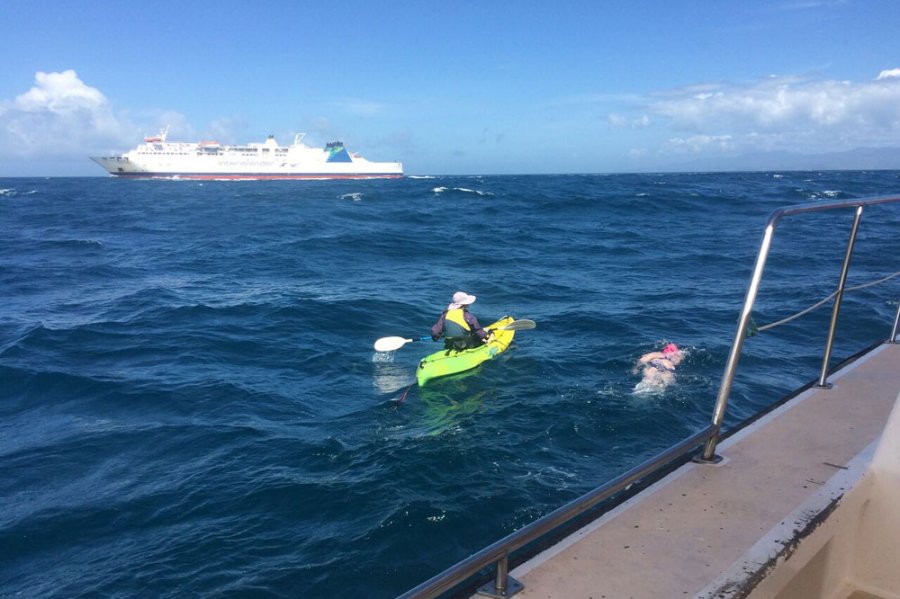
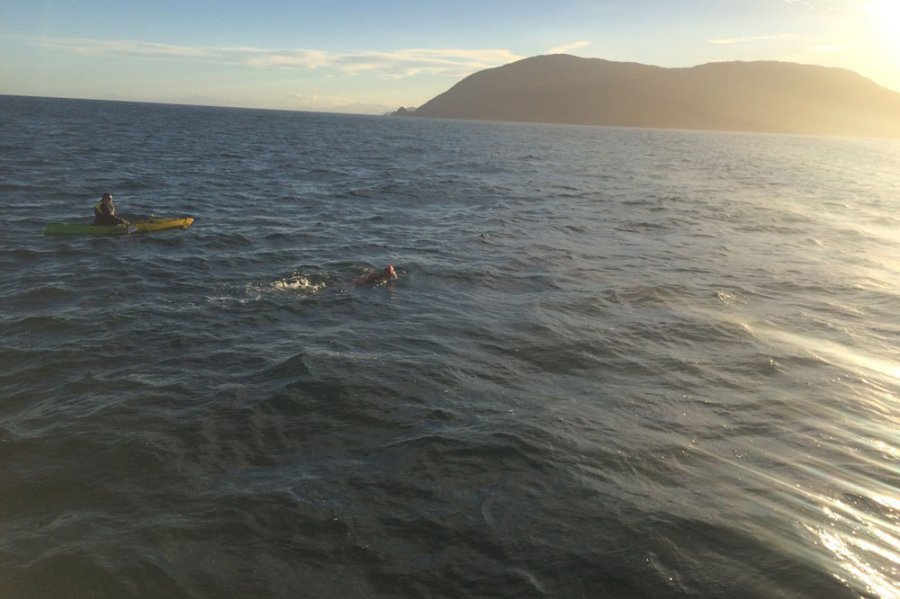
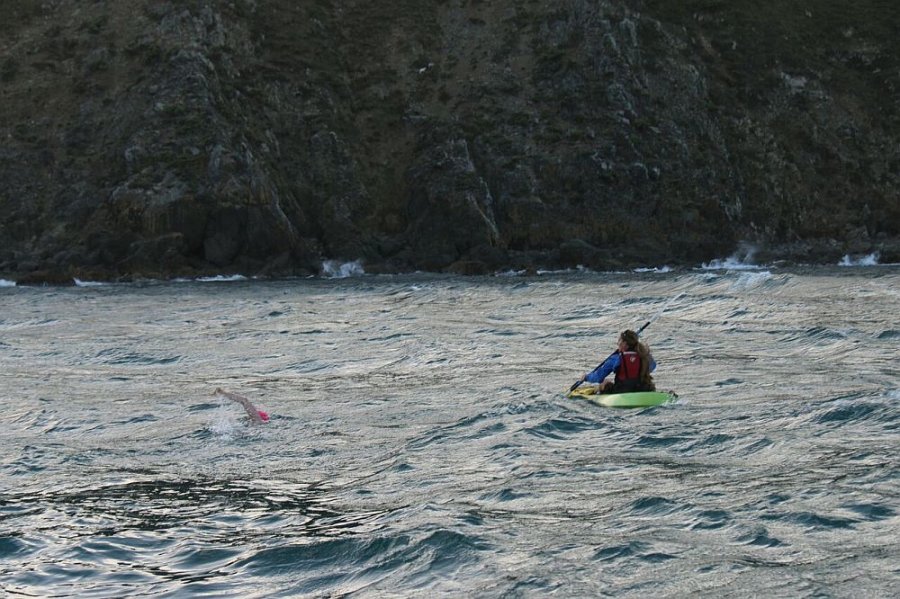
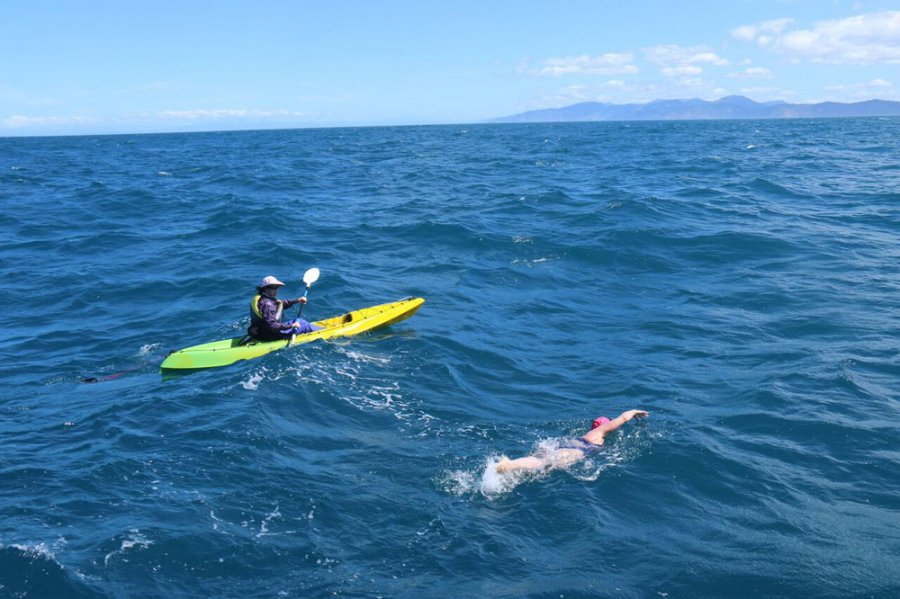
On Saturday, February 24th, 2018, in the wake of cyclone Gita,Abhejali Bernardova, a member of the Sri Chinmoy Marathon Team from Zlin in the Czech Republic, successfully conquered the Cook Strait of New Zealand in rough waters and challenging currents, becoming only the 10th swimmer and 4th woman - and probably the first vegetarian! - in the world to complete the Oceans Seven challenge since its inception in 2008.
The Oceans Seven challenge is the aquatic equivalent to the 'Seven summits' challenge of climbing some of the world's highest mountains. It includes swimming the English Channel, the Strait of Gibraltar, Catalina Channel in California, Tsugaru Channel (Japan), the Irish Channel between Ireland and Scotland, Molokai (Kaiwi) Channel in Hawaii and the Cook Strait. All of the swims are done in accordance with traditional English Channel rules: no neoprene, only a regular swim suit, cap and goggles, maybe some grease, and unassisted (no touching the boat etc.).The first person to complete it was Stephen Redmond from Ireland in 2012, and the first woman was Anna Carin Nordin from Sweden in 2013.
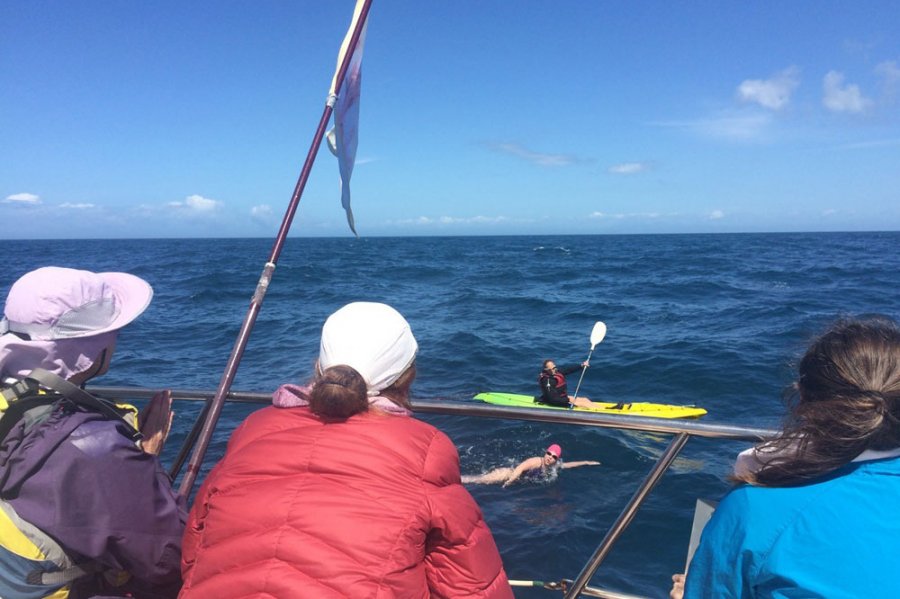
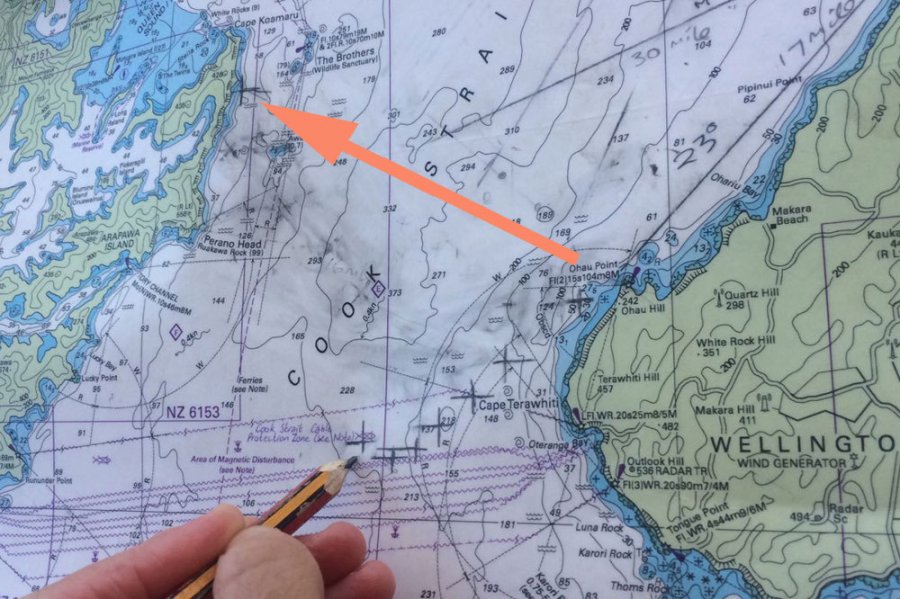
Starting at 8:11 a.m. from the North Island in strong swells that made her seasick for hours, and challenged by rough conditions and strong currents that slowed down her progress almost to a standstill, Abhejali stayed focused and positive and finally managed to complete the swim in 13 hours, 9 minutes and 48 seconds, arriving at the tip of the South Island in the dark around 9.20pm. For over three hours during the swim she was fighting strong currents merely to hold her position and not be pulled back towards Wellington. Finally, however, the sea settled and she was able to break through the currents and touch the shore of the Southern Island. Water temperature started out with 20°C, falling to 17°C near the Southern Island.
The timing to complete these crossings is extremely tight, as the swimmers can only attempt during either the full moon or on the half moon. At these times the currents and tides are at their calmest. With cyclone Gita hitting New Zealand on Tuesday and Wednesday, Abhejali had to cancel the planned swim on Thursday due to rough seas. On Friday the boat was not available. Even on Saturday the seas were still rough. It was hard to decide whether it would be wise to start or not, but the swim went off. Right from the start, Abhejali was challenged by high swells, seasickness and a jellyfish that got stuck in her swimsuit. There were moments where she doubted her decision to start that day - but she never thought of stopping. Had she not been able to start or complete the crossing, her next opportunity would have been two weeks later at the earliest, creating logistical, financial and other difficulties.
Abhejali is not only the 10th swimmer and 4th woman to achieve the Oceans Seven challenge, but also the first Czech swimmer. Whereas over 4,833 people have summited Mount Everest (8,306 summits) and around 1800 people have swum the English Channel, not even 100 have crossed the Cook Strait. It took Abhejali 8 years to complete the Oceans Seven swims. Coming from a running background, her first major aquatic adventure was a 4 person English Channel relay in 2010, followed by her first long solo challenge - the Sri Chinmoy Marathon Swim from Rapperswil to Zürich (26,4 km) in 2011. This gave her the courage and inspiration to go for the English Channel (2011), then on to swim around Manhattan Island (New York, 2012) and from Europe to Africa (Gibraltar Straits, 2013). As a natural next new challenge, Catalina came up (2015), followed by an icy and iconic 2 hours 35 minute Robben Island swim in 9°C waters (2016) which gave her the confidence to believe the cold North Channel (2017) was achievable. Before that, however, Tsugaru (2016) and then Molokai Channel, her most difficult swim (2017, almost 22 hours), were ticked off.
What is remarkable about her swims is not only the achievement in itself - battling seasickness, jellyfish, strong currents, cold water and many other challenges on the way - but also the fact that she was successful on her first attempt in each swim. As opposed to running a marathon or ultramarathon, you never really know with all of these Channel swims when and if the weather and tides will actually allow the swim to take place. Also, the swimmer may be forced to abandon the attempt for safety or other reasons after just a few hours into the swim, or even only a few metres from the finish. A clear asset in all her aquatic adventures has been her ability to keep a positive, cheerfully determined attitude, trusting in the power of Grace from above, the supportive prayers and good vibrations sent from her teammates and friends from all over the world, as well as the inner focus and calmness gained by years of regular practice of meditation. Her meditation teacher Sri Chinmoy (1931-2007) was himself a pioneer in the world of sports who inspired many people to believe in their unlimited inner potential and reach unprecedented goals. For his inspiration and service to open water swimming, he was inducted into the International Marathon Swimming Hall of Fame (IMSHOF) posthumously in 2012.
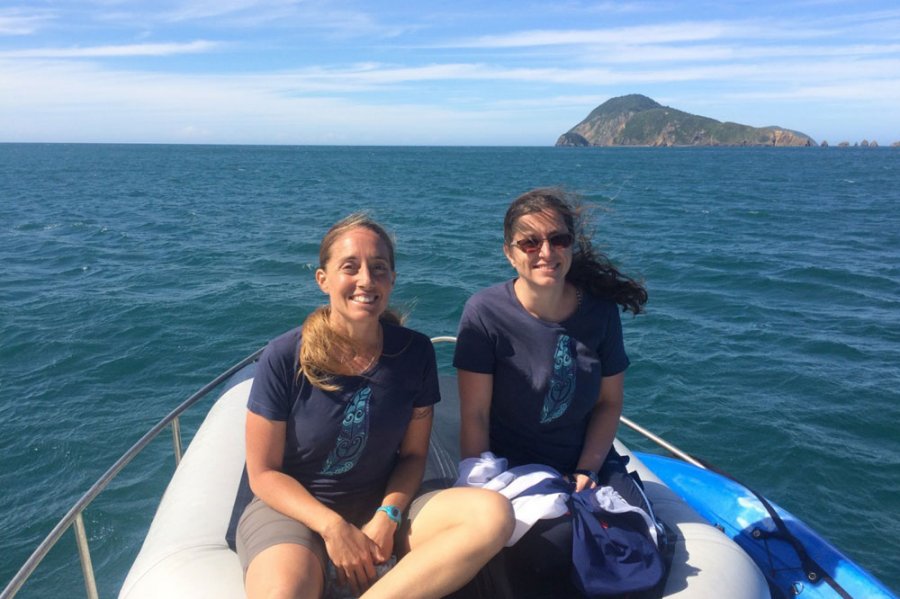
Abhejali was crewed on her Cook Strait swim by Harita Davies, who in 2017 became New Zealand’s first woman to complete the world’s longest race – the Self Transcendence 3,100 mile race in New York - and who also took part in an English Channel relay in 2014 and has crewed for Abhejali on other swims as a helper and kayaker. Helena Royden, a Czech speaking New Zealander, Stacey Marsh, P. Thorpe and Vera Sevestiyanova were also part of the helper team.
Asked, how she feels after her great achievement, Abhejali simply said: "Grateful and happy." And she is looking forward to more running again - especially in the Sri Chinmoy Oneness-Home Peace Run, which she helps organizing.
Video: Swimming the English Channel Abhejali talks about the inner aspects of her challenges - what she gets out of them, how she started, and how meditation helps her in difficult situations.
From the archives: The beginning years of the world's longest race
By Sahishnu Szczesiul
Saturday 10. February 2018
Sahishnu Szczesiul, Associate Race Director and also our race statistician and historian, has been hard at work on compiling accounts of some of the more compelling moments in the Sri Chinmoy Marathon Team's 40 year history. Recently he has published two remarkable accounts in PDF form - the very first 3100 mile race in 1997, as well as its immediate precessor, the first and only 2700 mile race in 1996.
The 2700 Mile race was a giant leap forward in Sri Chinmoy's vision of what athletes could achieve with their indomitable inner spirit; it was more than double the length of the previous longest race in the Marathon Team's repertoire (1300 miles). In Sahishnu's words: "This event was a steppingstone to new achievement that somehow would be revealed. The runners ignited the search for athletic and inner perfection at the same time. The words 'self-transcendence' had become mainstream in the conscioiusness of the athletic world, and remarkable in the spiritual realm."
Video: Shamita's 7-day run from the east to west of Austria
By Nirbhasa Mageeauthor bio »
Tuesday 30. January 2018
About the author:
Nirbhasa is from Ireland. He is an enthusiastic multi-day runner, having completed four times the Sri Chinmoy Self-Transcendence 3100 Mile Race - the longest race in the world.
In December, Shamita Achenbach-Konig set out from her home in Vienna to run all the way to her birthplace of Bregenz, in the very west. This 640km journey took her 7 days of running, 16 hours of days, through all kinds of wintry weather. Austria is also famous for its hills and mountains, and Shamita had to ascend and descend over 4000m in her journey.
A professional cellist by profession, Shamita has been running ultra-distance races with the Sri Chinmoy Marathon Team for over 25 years. Earlier this year, she also visited Bregenz, this time to run all around the famous Lake Constance. You can read all about that here...
Nirbhasa is from Ireland. He is an enthusiastic multi-day runner, having completed four times the Sri Chinmoy Self-Transcendence 3100 Mile Race - the longest race in the world.
Samunnati Nataliya Lehonkova from the Sri Chinmoy Marathon Team represented the Ukraine in the 2016 Olympic marathon in Rio, and has also won marathons in Los Angeles, Dublin, Edinburgh, Belfast and Toulouse. Her most recent win, in the 2017 Dublin marathon, established a personal best of 2:28.
In this video, Samunnati sat down with her friend and 3100 Mile race finisher Jayasalini Abramovskikh and talked about becoming a meditation student of Sri Chinmoy at the age of 12 and how that slowly led to her running longer and longer distances. She also talks a little about her training schedule, and how Sri Chinmoy's philosophy of self-transcendence inspires her to run.
Before she became a professional runner, Samunnati was a regular on the international Peace Run team; she reminices a little about travels all around Europe and Australia carrying a torch for world harmony.





 Petra Kasperova from the Czech Republic, the winner of our Sri Chinmoy Six Day Race which took place this year in Flushing Meadows Corona Park in New York, was recently featured in a new inspirational book called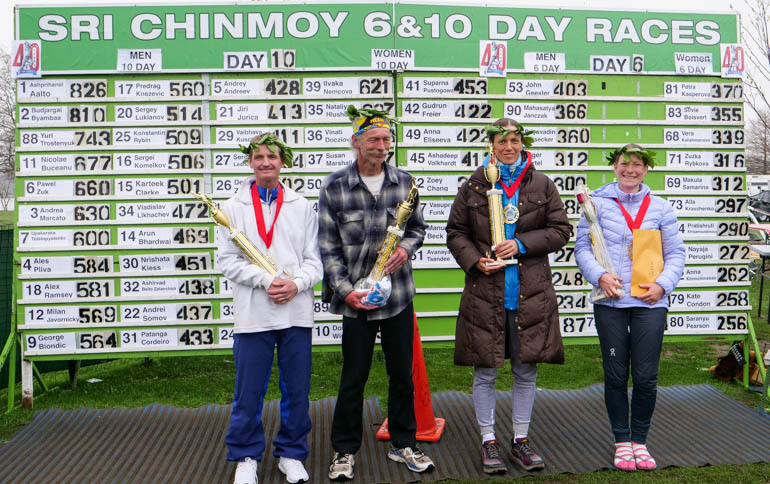
 During the ride, I tried to be grateful for the moment and enjoy. When cycling I turned my phone off to avoid being distracted and gain an excuse to stop and break my rhythm.